

스승의날 역사 총정리, 유래부터 현재 의미까지
[작성자: 인포맨즈 기자]
매년 5월이 되면 많은 사람들이 ‘스승의날 역사’에 관심을 가진다. 단순히 카네이션을 전달하는 기념일로 알려져 있지만, 실제로 스승의날은 한국 교육 문화와 사회 변화가 담긴 상징적인 날이다. 특히 최근에는 교권, 교육 환경, 감사 문화 변화까지 함께 논의되면서 스승의날의 의미가 더욱 확대되고 있다.
이 포스팅은 쿠팡 파트너스 활동의 일환으로, 이에 따른 일정액의 수수료를 제공받습니다.
Every May, many people become interested in the history of Teachers’ Day in Korea. Although it is commonly known as a day for giving carnations to teachers, the holiday actually reflects Korean educational culture and social change. Recently, discussions about teacher rights, educational environments, and changing appreciation culture have expanded the meaning of Teachers’ Day even further.

1. 스승의날 역사 시작과 유래
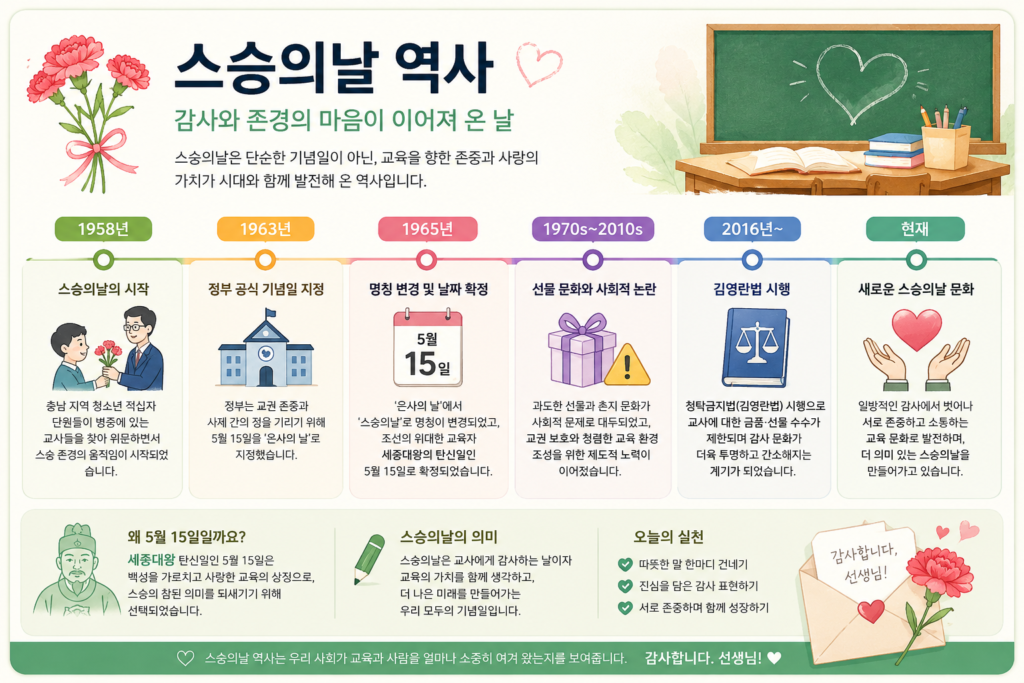
현재의 스승의날은 1958년 충청남도 지역 청소년 적십자 단원들의 활동에서 시작됐다. 당시 학생들은 병환 중인 교사들을 찾아가 위문 활동을 진행했고, 이러한 움직임이 전국으로 퍼지면서 ‘교사를 존중하자’는 사회적 분위기가 형성됐다. 이것이 오늘날 알려진 스승의날 역사의 출발점이다.
The modern Teachers’ Day began in 1958 through activities by Korean Red Cross Youth members in Chungcheongnam-do. Students visited sick teachers and offered support, and the movement spread across the country, creating a social atmosphere of respecting teachers. This became the starting point of today’s Teachers’ Day history.
이 포스팅은 쿠팡 파트너스 활동의 일환으로, 이에 따른 일정액의 수수료를 제공받습니다.
1963년 정부는 공식적으로 ‘은사의 날’을 지정했다. 하지만 명칭이 다소 권위적이라는 지적이 나오면서 1965년부터 현재의 ‘스승의날’로 변경됐다. 날짜 역시 세종대왕 탄신일인 5월 15일로 정해졌다.
In 1963, the government officially designated the holiday as “Eunsa’s Day.” However, the name was later criticized as being too authoritative, so it was changed to “Teachers’ Day” in 1965. The date was set as May 15, the birthday of King Sejong.
세종대왕: 한글을 창제한 조선의 왕으로 한국 역사에서 가장 존경받는 교육 상징 인물 가운데 하나다.
✨ AD이 포스팅은 쿠팡 파트너스 활동의 일환으로, 이에 따른 일정액의 수수료를 제공받습니다.
King Sejong: The king who created Hangul and is considered one of Korea’s most respected educational symbols.
2. 스승의날 역사 속 사회 변화와 논란
스승의날 역사는 단순한 감사 문화만 담고 있지 않다. 1970년대 이후 일부 학부모들의 과도한 선물 문화와 촌지 문제가 사회적 논란으로 떠오르기 시작했다. 이에 따라 정부는 학교 내 부정 청탁과 금품 제공 문제를 줄이기 위해 여러 정책을 시행했다.
The history of Teachers’ Day does not only include appreciation culture. Since the 1970s, excessive gift-giving and illegal money offerings from some parents became social controversies. Therefore, the government introduced several policies to reduce corruption and inappropriate gifts in schools.
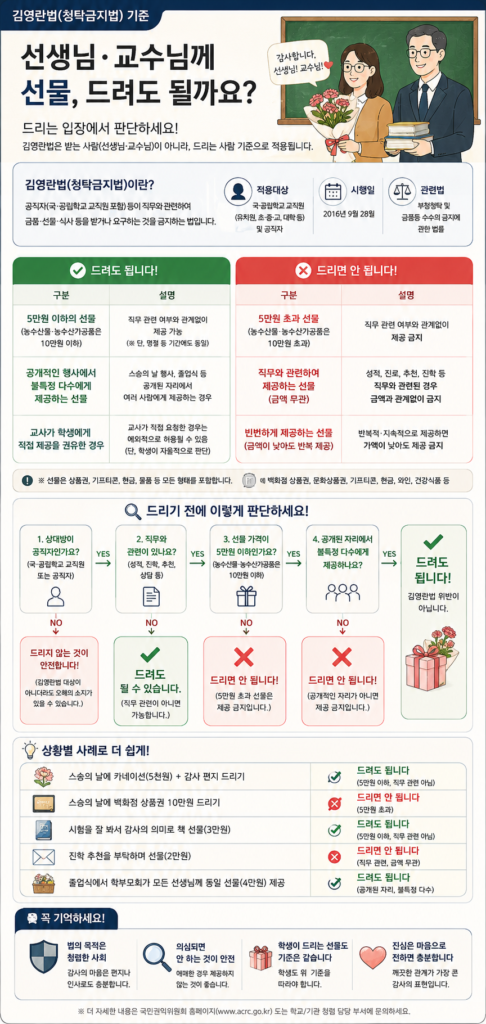
특히 2016년 시행된 김영란법은 스승의날 문화를 크게 바꿨다. 교사들이 일정 금액 이상의 선물이나 식사를 받을 수 없게 되면서 학교 현장은 이전보다 훨씬 간소한 분위기로 변했다. 이러한 변화는 스승의날 역사에서 중요한 전환점으로 평가된다.
Especially after the anti-corruption law called the Kim Young-ran Act was introduced in 2016, the Teachers’ Day culture changed dramatically. Teachers were restricted from receiving expensive gifts or meals, creating a much simpler atmosphere in schools. This change is considered a major turning point in the history of Teachers’ Day.
김영란법: 공직자·교사·언론인의 금품 수수를 제한하기 위해 시행된 청탁금지법이다.
Kim Young-ran Act: An anti-corruption law that restricts public officials, teachers, and journalists from receiving gifts or money.
3. 현대 사회에서 다시 보는 스승의날 역사 의미
최근 스승의날 역사는 새로운 방향으로 변화하고 있다. 과거에는 학생이 교사에게 일방적으로 감사하는 분위기가 강했다면, 현재는 서로 존중하고 소통하는 교육 문화가 강조된다. 일부 학교에서는 편지쓰기 대신 상담 프로그램이나 진로 체험 활동을 운영하며 새로운 스승의날 문화를 만들고 있다.
Recently, the history of Teachers’ Day has been moving in a new direction. In the past, the atmosphere focused mainly on students expressing gratitude to teachers. Today, schools emphasize mutual respect and communication. Some schools now operate counseling programs and career experience activities instead of traditional letter-writing events.
교육 전문가들은 스승의날 역사를 단순한 기념일의 흐름으로 볼 것이 아니라, 한국 사회 교육 가치의 변화 과정으로 이해해야 한다고 설명한다. 디지털 교육 시대가 빠르게 확대되고 있지만 학생 성장을 이끄는 교사의 역할은 여전히 중요하기 때문이다.
Education experts explain that the history of Teachers’ Day should not simply be viewed as the evolution of a holiday, but as a process reflecting changes in Korean educational values. Even in the rapidly expanding digital education era, the role of teachers in guiding student growth remains essential.
오늘날 스승의날은 단순히 꽃과 선물을 주고받는 날을 넘어, 교육의 본질과 존중의 의미를 다시 생각하게 만드는 중요한 사회적 기념일로 자리 잡고 있다.
Today, Teachers’ Day is no longer just a day for exchanging flowers and gifts. It has become an important social occasion that encourages people to reflect on the true meaning of education and respect.
이 지면은 본문이 생략된
화면입니다.